
Technological advancements in geoscience are often incremental—small steps that help refine our ability to understand the subsurface. But occasionally, we witness a genuine leap. DUG Technology’s Chief Geophysicist, Tom Rayment, considers the impact of elastic MP-FWI imaging and asks, “Is traditional seismic processing finally a thing of the past?”
For the past century, seismic data has been an invaluable tool for detecting hydrocarbons. Although methods have become more sophisticated, the fundamental workflow for turning acquired data into interpretable products largely remains the same. The advent of elastic multi-parameter full waveform inversion (MP-FWI) imaging represents a significant shift away from the traditional approach.
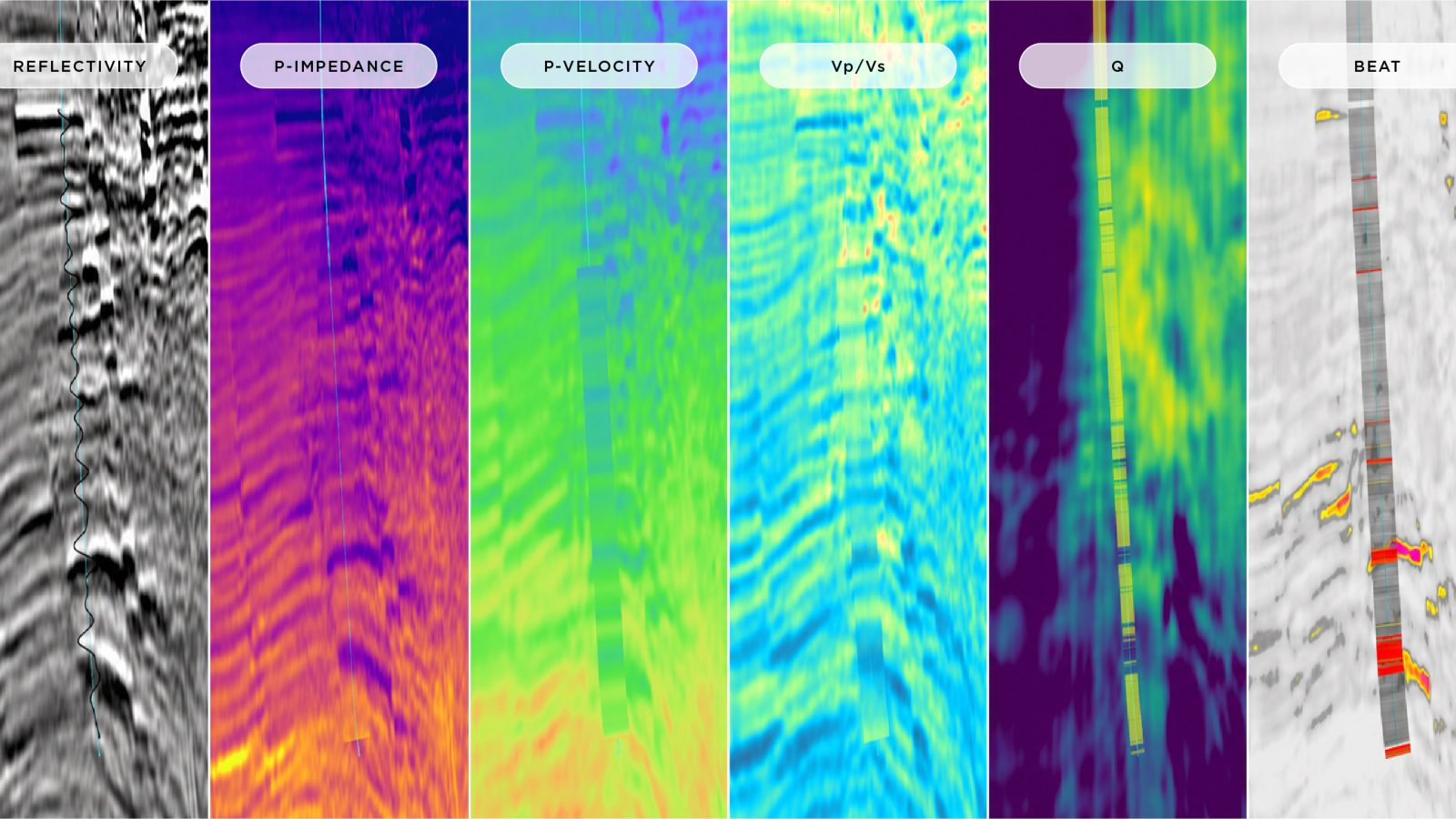
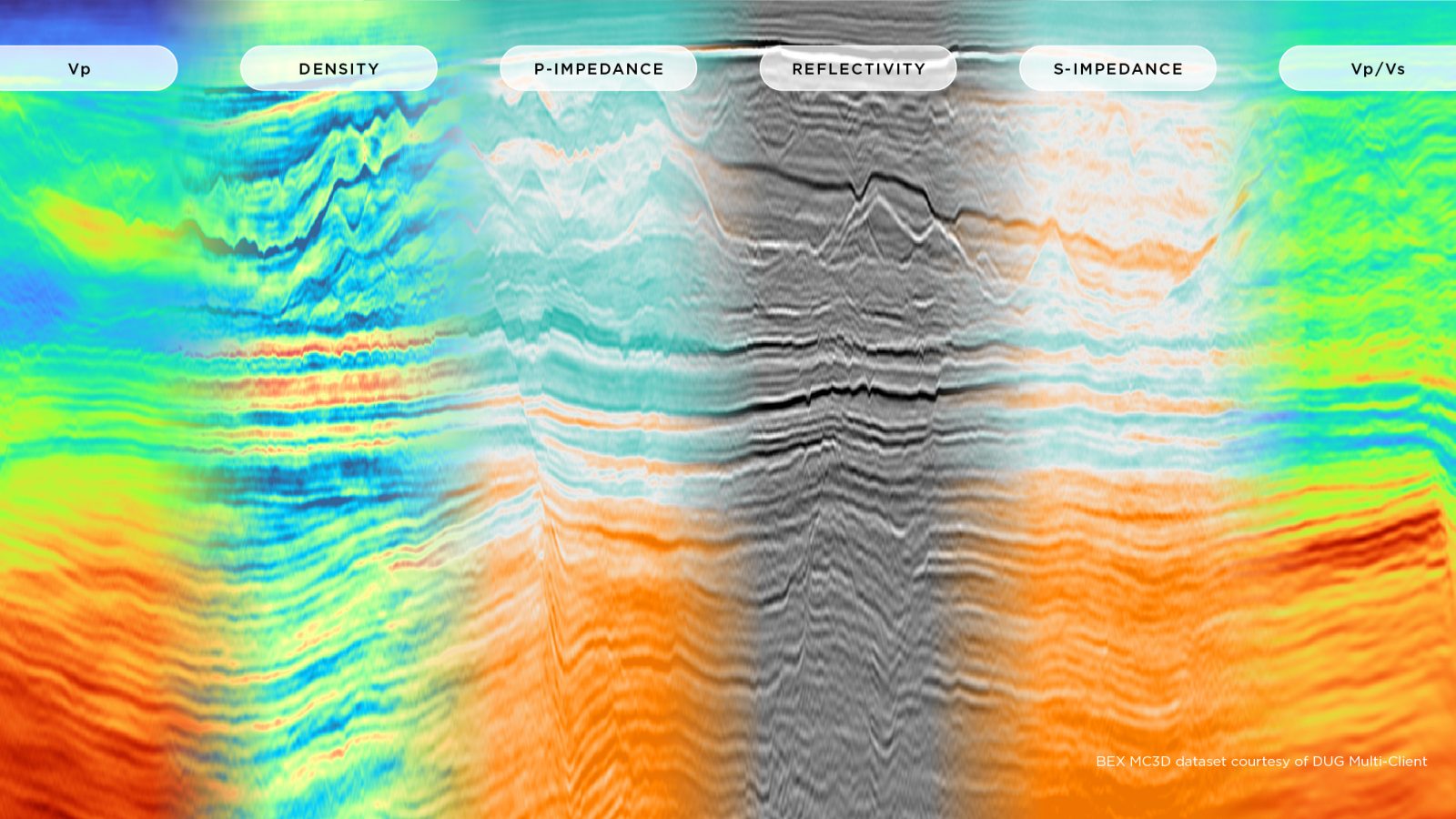
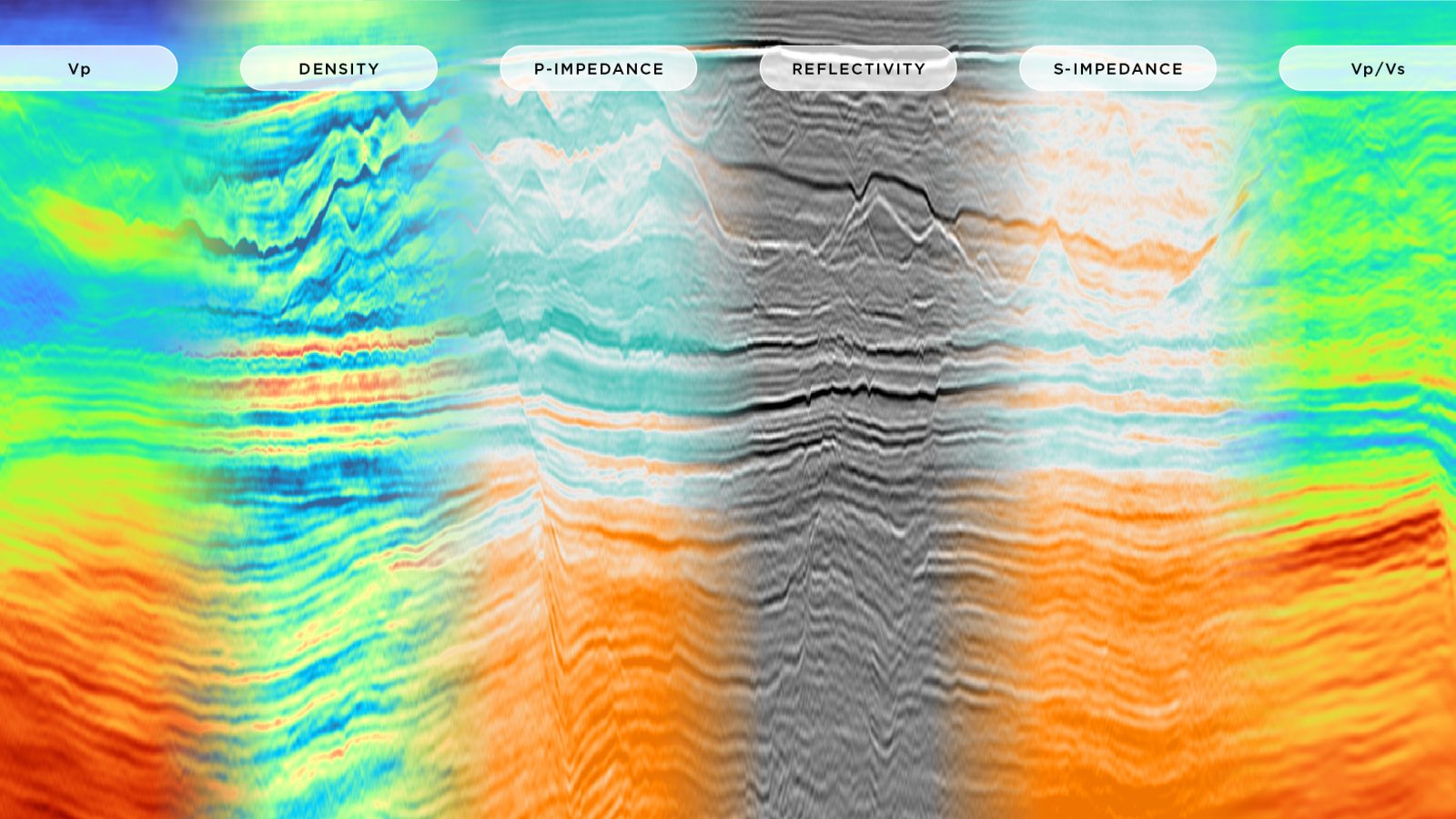
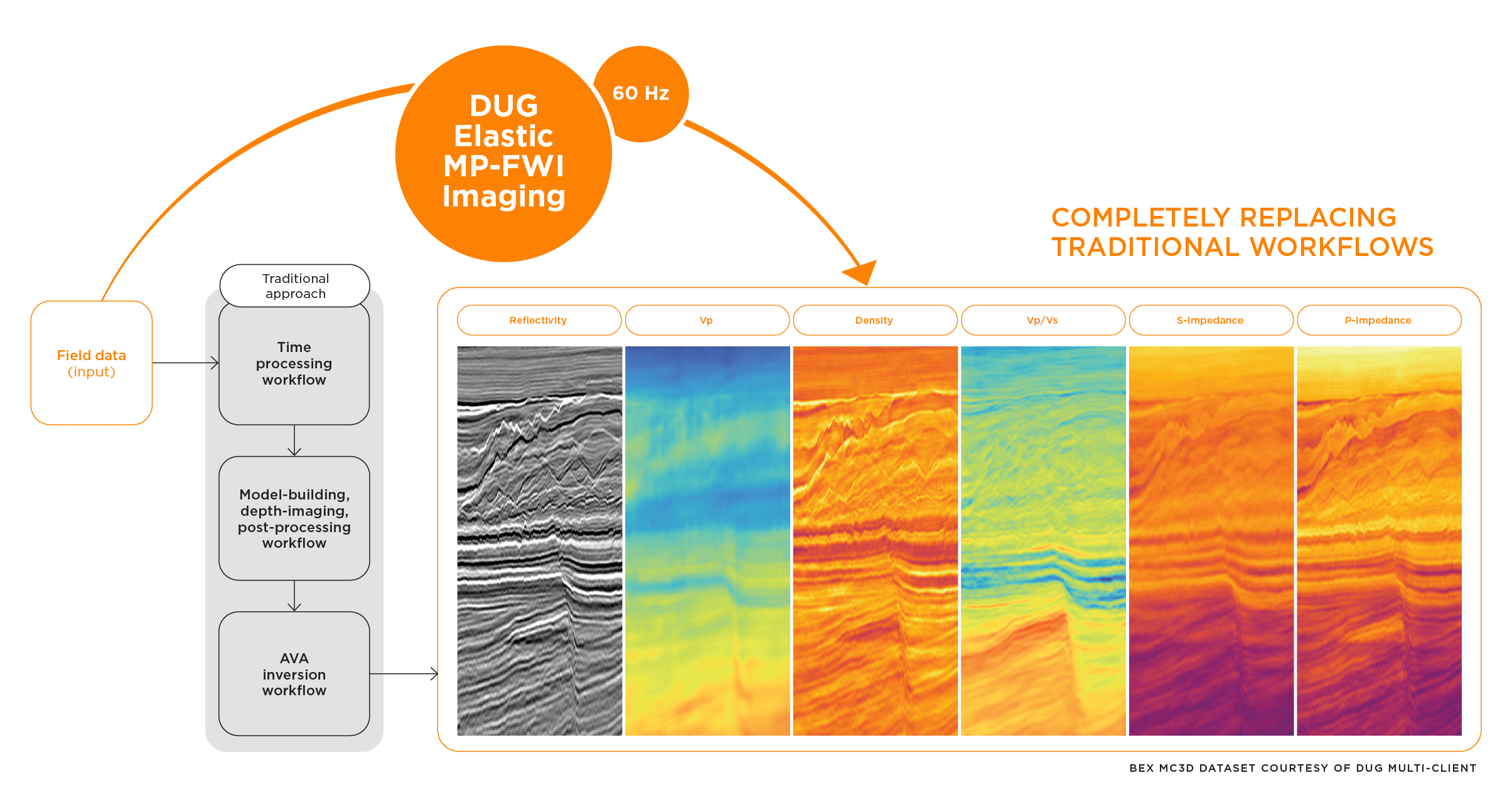
The acoustic MP-FWI imaging implementation has demonstrated significant uplifts without needing conventional time-processing, model-building, or depth-migration techniques. Elastic MP-FWI imaging is a further step-change, also deriving rock properties and effectively rendering the amplitude variation with angle (AVA) inversion workflow redundant. The approach will soon make conventional workflows obsolete, if it hasn’t already.
Despite this monumental leap, the technology is still young, with ample room for more progress. Most FWI implementations use a single component of the acquired data (hydrophone for marine, vertical geophone/accelerometer for land). However, additional components offer complementary information that can further constrain results. Recent developments show that two-component towed streamer and ocean-bottom seismic MP-FWI imaging can further improve results and accelerate convergence.
The logical next step is to include horizontal components. Shear waves provide valuable subsurface information, especially in areas of strong P-wave absorption like gas bodies. Recent DUG projects are already demonstrating that the benefits of converted-wave processing can be realised with elastic MP-FWI imaging. Furthermore, on land, exploiting shear waves in the form of ground roll is now viable. What was once noise is now a useful signal, inverted via elastic FWI to provide high-resolution shear-wave-velocity models. Capturing near-surface complexity is crucial for successfully illuminating deeper targets.
Another benefit is the seamless integration of expertise. Processing, imaging, and quantitative interpretation geophysicists can now work simultaneously on a project, abandoning the siloed conventional workflows. Closer collaboration fosters better understanding, which translates to optimal results. This will soon extend beyond AVA inversion into reservoir characterisation and modelling. Elastic MP-FWI imaging will produce a suite of outputs, providing a rich model space for reservoir engineers to make probabilistic predictions that honour both seismic and well data.
This technological leap was first conceived by the FWI pioneers in the 1980s. Its reality today is thanks to the skills of research and development teams and modern high performance computing. This essential work continues in earnest at DUG; as the technology evolves, it will continue to extend what is possible with seismic data, ultimately allowing the industry to make better, faster decisions.