
Ever-increasing computing power, in conjunction with geophysical expertise, has brought seismic imaging much closer to the physics of the real world. Taking full advantage of this progress also requires careful attention to the conditions under which seismic data are acquired.
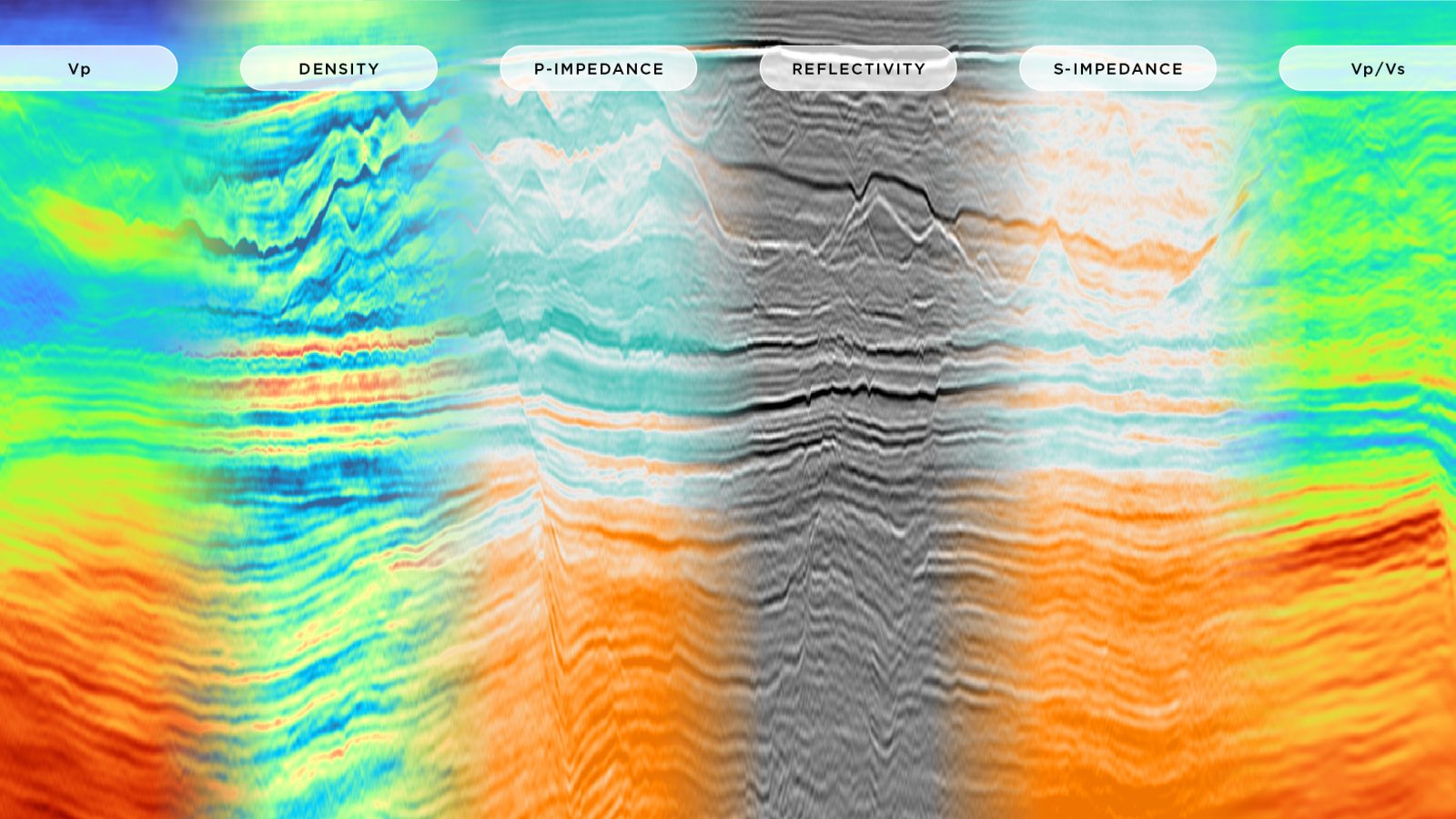
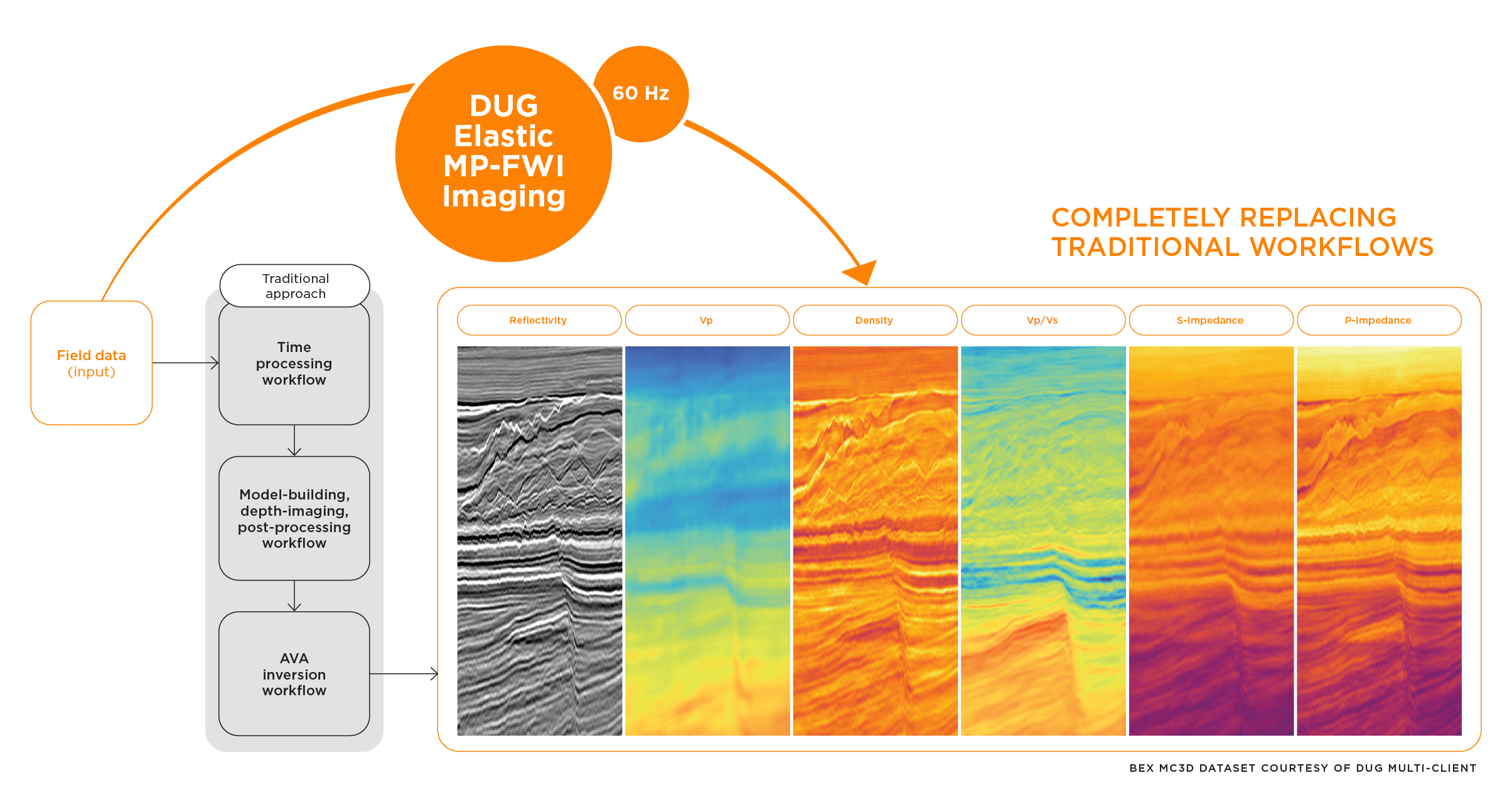
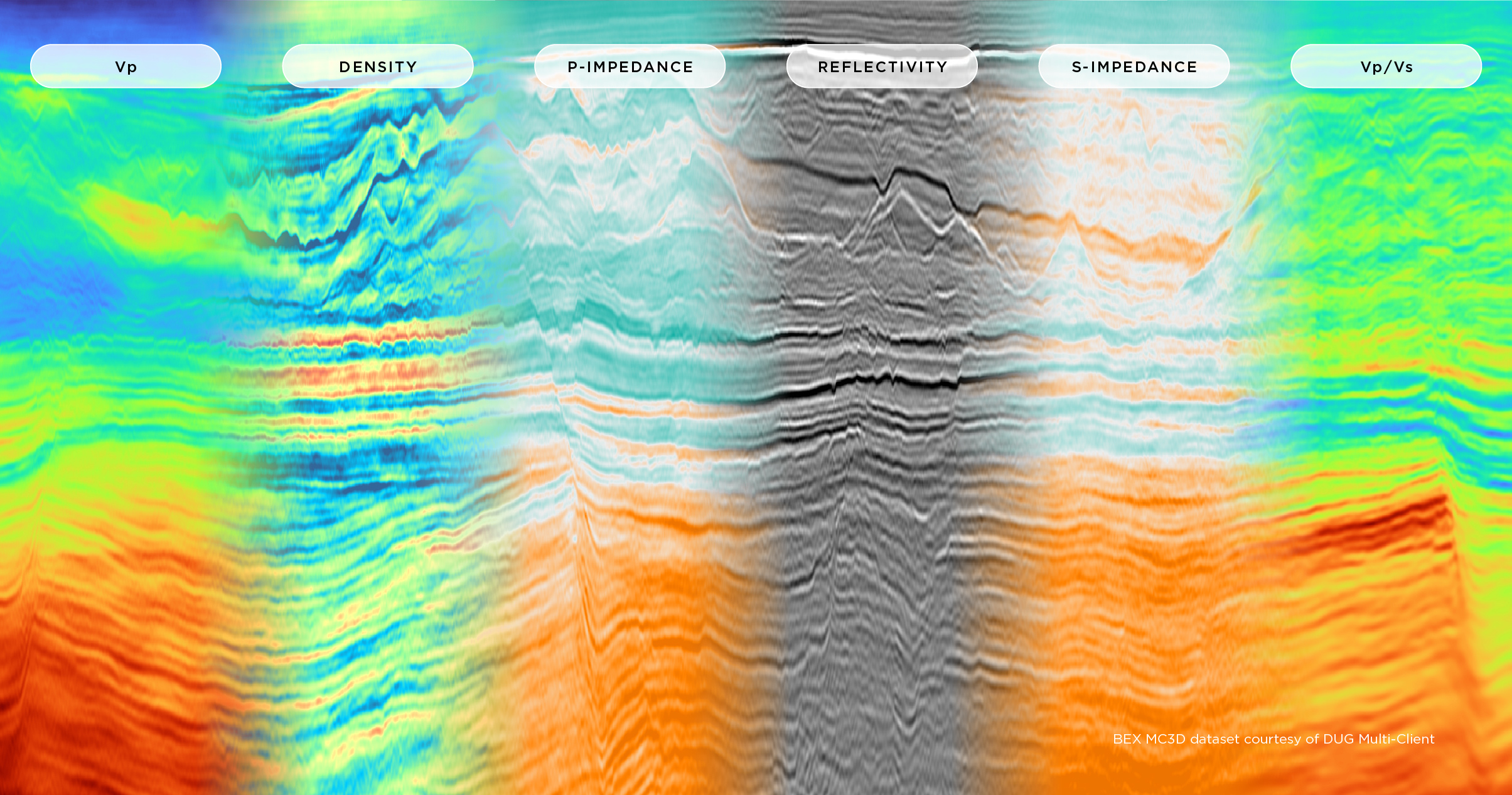
Over the past two decades, advances in computing have enabled increasingly sophisticated wave-equation methods, from reverse time migration to acoustic and now DUG Elastic Multi-parameter Full Waveform Inversion (MP-FWI). By harnessing the full wavefield including both compressional and shear waves, and including primaries, multiples and ghosts, elastic MP-FWI derives reflectivity and rock properties, replacing conventional processing, imaging and subsequent rock-property inversion workflows. That capability makes accurate modelling of the recorded wavefield in FWI essential.
FWI simulates a seismic survey inside a computer, using differences between synthetic and recorded field data to update subsurface models. If the simulation misrepresents the acquisition or wave propagation, the inversion can attribute those discrepancies to changes in rock properties.
In particular, source and receiver arrays illustrate the challenge. Their individual elements combine to impose directivity onto source signatures. Modelling these arrays within MP-FWI preserves the amplitude-versus-angle relationships used to infer rock properties. Ignoring them risks introducing inaccuracies into the subsurface models.
Marine surveys introduce further complications. The water column changes throughout acquisition: tides alter water depth, while currents and changes in water properties affect wave travel times. Measuring and modelling these variations becomes particularly important when using free-surface multiples: waves that reflect from the sea surface and traverse the water column repeatedly. Small timing errors can accumulate across these journeys.
Attenuation also demands care. Seismic waves lose relatively little energy in water, but experience greater attenuation in sediments. Primaries and multiples follow different paths through the subsurface, so their attenuation cannot be represented by a single conventional one-dimensional inverse-Q correction. DUG Elastic MP-FWI incorporates attenuation into wave propagation, accounting for the losses along each unique path.
These important details determine whether modelled primaries and multiples match the recorded data in both timing and amplitude. The stakes rise further in time-lapse, or 4D MP-FWI, where acquisition-related differences between surveys must be distinguished from genuine reservoir changes.
DUG Elastic MP-FWI is changing the way we handle seismic data by utilising the elastic wave equation and accurately capturing the realities of seismic acquisition. Both are equally important to its success. Continued growth in computing power, combined with geophysical expertise, is enabling more faithful modelling of all these physical effects, helping the technology deliver increasingly accurate results.